
Faizan Asad, M.Sc., Circular Materials Researcher, Arcada University of Applied Sciences, Department of Energy and Materials Technology
Paula Linderbäck, Ph.D., Principal Lecturer in Circular Economy, Arcada University of Applied Sciences
Netsanet Legesse, M.Sc., Circular Materials Specialist, Arcada University of Applied Sciences
Building sustainable material value chains through applied RDI Developing a sustainable material is more than demonstrating that a renewable raw material can replace part of a fossil-based material. Fossil-based polymers operate within mature value chains with established suppliers, logistics, material specifications, processing technologies, and markets. Emerging biobased materials must build comparable functionality while also demonstrating sourcing, reliable performance and viable routes for reuse and recycling. Creating these new material flows therefore requires collaboration across actors that do not necessarily operate within the same value chain today.
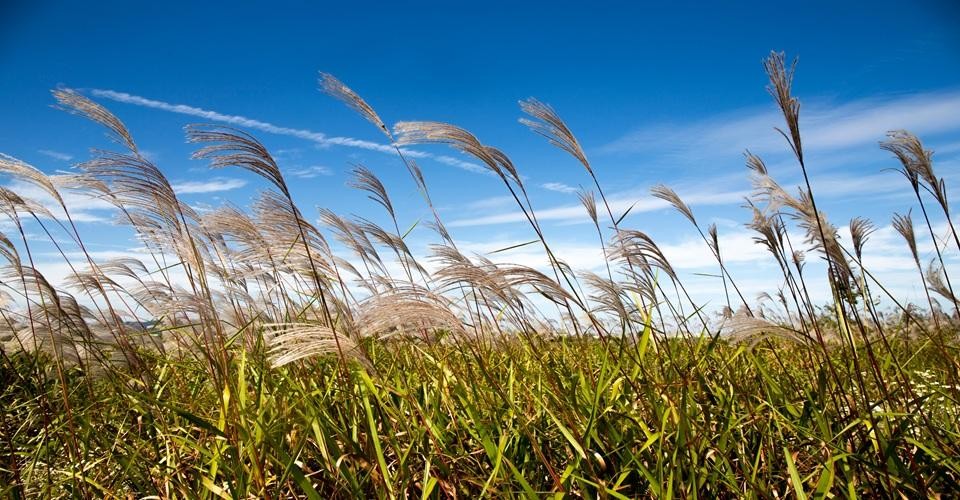
Common reed (Phragmites australis) illustrates this challenge. For coastal managers, harvesting must respond to local ecological conditions and environmental objectives (Karstens et al. 2019). For biomass suppliers, reed must become a consistent and manageable raw material, while manufacturers require predictable processing and product performance. Recyclers and other downstream actors add further requirements concerning recovery and second-life use. Connecting these requirements is a practical task for research, development, and innovation (RDI). At Arcada University of Applied Sciences, reed provides a case for examining how applied research can help partners move from a promising resource towards an application whose benefits can be assessed.
BalticReed, ReCreateBioBased and Reed2Market projects contribute to this work through complementary activities. BalticReed project established experience in harvesting, logistics, collaboration and early product development. ReCreateBioBased project extends the work towards circular biomass value chains, while Reed2Market project investigates the material knowledge needed for industrial applications. Together, they provide a way to follow the whole value chain from harvesting, material performance, industrial applications and end-of-life solutions. Rather than considering these projects as isolated activities, this article examines how continuity between them can support the development of a sustainable material value chain through applied RDI activities. It considers both documented project results and longer-term outcomes and impacts.
Creating continuity between projects
BalticReed (2023–2026), led by the John Nurminen Foundation, established practical experience in reed harvesting, biomass supply, product development and cross-border collaboration. The project reported 24 harvesting sites and 14 product development cases across the consortium (Interreg Central Baltic n.d.a). ReCreateBioBased, led by Arcada from 2026 to 2029, builds on this work by developing circular value chains for underutilised biomass and material side streams (Interreg Central Baltic n.d.b). Reed2Market, funded by Business Finland for 2026–2029, complements these activities through research on reed-reinforced polymers, processing, performance and end-of-life options (Arcada n.d.b).
Continuity between the projects comes from carrying knowledge, partnerships and unresolved questions forward. Feedstock quality, processing requirements, suitable applications and recovery routes are interconnected, and findings at one stage can influence decisions elsewhere in the value chain. Applied RDI continuity therefore involves more than consecutive projects; it means retaining both successful results and lessons from approaches that proved unsuitable.
Translating company needs into research questions
Arcada’s contribution is particularly visible where a company’s product requirements meet experimental work. Arcada’s Sustainability and Tech Lab bring teachers, researchers, students and partners together around materials, product planning and manufacturing (Arcada n.d.a). This setting allows practical questions to be investigated before a company commits to a wider production trial.
A concrete example is the collaboration with Sinituote during the BalticReed project. In October 2025, Arcada reported the development of a composite containing ground common reed from the Baltic Sea and plastic for a cleaning-tool handle holder (Arcada Communications, 2025). The example gives reed research a defined context. A component for cleaning equipment needs to function under the conditions in which customers will use it; its renewable content alone cannot establish sustainability.
This approach gives company collaboration a clear purpose. Manufacturers contribute knowledge of production constraints and customer expectations, while researchers design comparisons and examine the limitations of the material. Certification pathways, including the food-contact potential identified in Reed2Market, remain in questions for investigation; their inclusion in a project does not mean approval has been obtained (Arcada n.d.b).
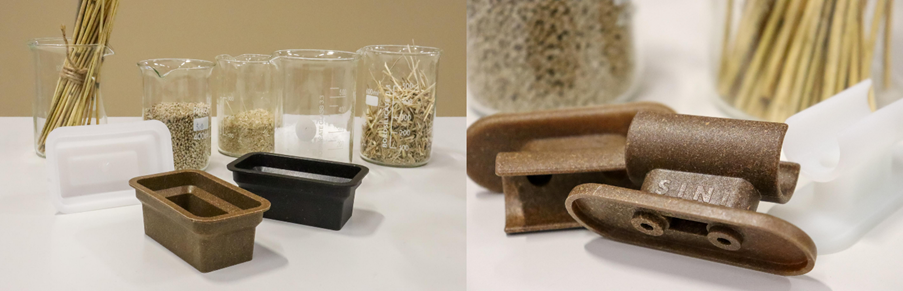
Figure 1. Examples of product prototypes made from polymer–reed biocomposites.
Making education part of development
Student participation connects reed research with the educational role of a university of applied sciences. Rather than treating research projects and teaching as separate activities, project questions can be integrated into courses, theses and laboratory assignments. Students gain experience with real development challenges, while their work can contribute observations, data and ideas to wider the RDI process. The BalticReed Hackathon provides one example (Arcada 2026). Arcada and Hanken students worked together with reed-related challenges within circular economy courses. Researchers and companies introduced reed applications, after which students developed their own circular solutions in guided workshops (Central Baltic n.d.c). This created an opportunity to connect product ideas with questions about resources and business needs.
Laboratory learning provides a further connection. A published account of collaboration between BalticReed and Circagile describes student work involving compounding, injection moulding and preparation of samples for mechanical characterisation, alongside prototype work at Arcada (Gunathilaka Moragoda & Linderbäck 2024). Such activities let students encounter the practical demands of converting biomass into reproducible material.
Testing sustainability claims across the value chain
Responsible reed product development requires care in describing environmental benefits. The BalticReed project published monitoring summary reports showing no evidence of short-term negative ecological effects in the monitored areas, but also no measurable improvements during the project period. It identifies hydrological variability and the limited monitoring period as reasons for caution in interpretation (Interreg Central Baltic n.d.a). These findings support continued assessment of site-adapted harvesting; they do not establish that every harvesting operation improves water quality.
Reuse and recycling also require an operational route. Technically reprocessable material needs a collection system, a means of identifying and separating it, and an application for the recovered material. The ReCreateBioBased project value-chain work and the Reed2Market project reprocessing studies can address different parts of this problem. Product design should therefore consider end-of-life recovery, alongside performance and cost.
Economic assessment must connect the same stages. Manufacturers need information about delivered material quality and cost, while suppliers need credible demand and workable specifications. An application that performs well in a laboratory still requires evidence of supply reliability and production feasibility. Arcada can help partners identify which uncertainties a further trial would resolve and which require expertise beyond the materials laboratory.
Showing what responsible RDI achieves
The three projects suggest a practical way to report progress. Immediate outputs include documented trials, prototypes, students’ work, and working relationships. Outcomes concern what partners subsequently do with these outputs, such as adopting a material specification or testing a recovery route. Longer-term impacts require evidence of sustained changes, including reduced virgin-material use or environmental improvement. Keeping these levels, separate makes reporting more useful to companies, funders and the wider public.
For a university of applied sciences, responsible RDI therefore involves more than producing research results within individual projects. Its role is to connect research, education, companies, and practical implementation over time, while maintaining the evidence needed to support development decisions. In the case of common reed, this means helping partners determine where the material can provide a technically, environmentally, and economically credible solution. In this way, continuity between projects can turn individual RDI outputs into knowledge and capabilities that support longer-term development towards sustainable value chains.
Arcada. 2026. The Reed Hackathon: From idea to product development. 22 April 2026. Accessed 1 October 2026. https://www.arcada.fi/en/article/blog/2026-04-22/reed-hackathon-idea-product-development
Arcada Communications. (2025, October 7). Sinituote and Arcada develop Finland’s first reed-based cleaning product. Arcada. https://www.arcada.fi/en/article/research/2025-10-07/sinituote-and-arcada-develop-finlands-first-reed-based-cleaning-product
Arcada. n.d.a. Arcada Sustainability and Tech Lab. Accessed 16 September 2026. https://www.arcada.fi/en/research/environments/arcada-sustainability-and-tech-lab
Arcada. n.d.b. Reed2Market: Development and Utilization of Reed-Based Biocomposites for Sustainable Industrial Applications. Accessed 16 September 2026. https://www.arcada.fi/en/research/projects/reed2market-development-and-utilization-reed-based-biocomposites-sustainable-industrial-applications
Interreg Central Baltic. n.d.a. BalticReed. Accessed 16 September 2026. https://centralbaltic.eu/project/balticreed/
Interreg Central Baltic. n.d.b. ReCreateBiobased. Accessed 16 September 2026. https://centralbaltic.eu/project/recreatebiobased/
Interreg Central Baltic. n.d.c. BalticReed Hackathon. Accessed 16 September 2026. https://centralbaltic.eu/project-events/baltic-reed-hackathon/
Gunathilaka Moragoda, N. & Linderbäck, P. 2024. Summer Learnings: Baltic Reed x Circagile Project. Arcada, 25 September 2024. Accessed 16 September 2026. https://www.arcada.fi/en/article/blog/2024-09-25/summer-learnings-baltic-reed-x-circagile-project
Karstens, S., Inácio, M. & Schernewski, G. 2019. Expert-based evaluation of ecosystem service provision in coastal reed wetlands under different management regimes. Frontiers in Environmental Science, 7, Article 63. https://doi.org/10.3389/fenvs.2019.00063




Vastaa