

Kukkonen, Tuula, Dr.Soc.Sc., principal lecturer, Karelia University of Applied Sciences
Makkonen, Heli, PhD Education, principal lecturer, Karelia University of Applied Sciences
Martiskainen, Tuula, PhD Health Sciences, principal lecturer, Karelia University of Applied Sciences
Myller Terhi, Dr.Soc.Sc., principal lecturer, Karelia University Applied Sciences.
Age-friendliness contributes to sustainable development. In this article, we examine how sustainable development is promoted by the KAFS research community on age-friendliness within the contexts of home, work, services, and society.
Ageing is often viewed as a threat to economic sustainability due to changes in the demographic dependency ratio and the growing need for health and long-term care services. However, older adults are a highly diverse group, and the majority of them are active retirees. We live in a society of longevity, and it is important to promote age-friendliness.
Age-friendliness enhances the well-being and social inclusion of older adults, which contributes to sustainable development. In the North Karelia region, the proportion of the population aged 65 and older is higher than the Finnish average. To strengthen age-friendliness, the Karelia University of Applied Sciences has established Karelia Research Community on Age-friendliness (KAFS). In this article, we examine how sustainable development is promoted by the KAFS within the contexts of home, work, services, and society (see Kukkonen et al. 2026).
Age-friendliness and sustainable development may be understood as interrelated concepts within a shared policy and research framework. Age-friendliness can be defined as an approach to sustainable development in which the physical, social, and service environments are developed to promote the well-being, functional capacity, inclusion, and equal opportunities for participation of older adults. From this perspective, older adults are seen as active contributors whose engagement promotes sustainable development. (See Komp-Leukkunen & Sarasma 2024; Myller & Puustinen 2022; Makkonen 2026.) However, there is no universally accepted definition for the concepts of sustainable development and sustainability (see Kortetmäki, Oksanen & Puumala 2025, 41). In this article, sustainable development is seen from the perspective of age-friendliness. We argue that ageing is an asset and a driver of sustainable development rather than as a societal challenge.
KAFS research community on age-friendliness as source for RDI activities
In last years, the universities of applied sciences in Finland have focused on development of RDI centers of excellence and research environments to respond the increasing needs of working life (Universities of Applied Sciences Act 932/2014; see e.g., Myller et al. 2026). In Karelia, the RDI activities concerning ageing have been fostered in the KAFS (see Kukkonen et al. 2026).
In the KAFS research community, the contexts of ageing, home, services, work and society have been identified as an essential framework for enhancing age-friendliness (Figure 1).
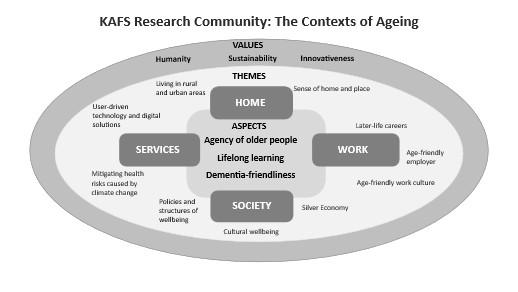
Figure 1. KAFS Research Community: the Contexts of Ageing
According to the framework formulated, the aspects of older adults’ agency, lifelong learning and dementia-friendliness are seen to be connected to the contexts of ageing. Based on this understanding, the RDI activities of KAFS contribute to sustainable development by strengthening age-friendliness.
Towards sustainable development in contexts of ageing
In the context of home, we focus on the meaning of home and place (see Myller et al. 2025). The living environment and its integration into developing services are crucial to older adults’ well-being and social sustainability. Age-friendly and socially sustainable housing requires consideration of older adults’ needs (Sturge, Miedema, Lindfors & Nordin 2025). These factors also have implications for economic sustainability. Kaivannonpuisto – ikä- ja muistiystävällinen puistoympäristö (Park Kaivannonpuisto – an age- and memory-friendly park) project demonstrates the practical application of age- and dementia-friendly, socially sustainable development. People living with memory disorders participated as experts by experience in the co-creation of Joensuu’s first age- and dementia-friendly park, combining supportive environmental design.
The service context is closely linked to both social and economic sustainability. The development of service delivery models influences the quality, accessibility, and efficiency of services, thereby supporting the well-being of older adults while contributing to the sustainable use of resources. Addressing the health risks associated with climate change also links age-friendliness to ecological and social sustainability (Dabelko-Schoeny et al. 2024). In the chAnGE project, Karelia University of Applied Sciences developed training for health and social care professionals on adaptation to climate change and mitigation of the health risks among older adults (Kukkonen et al. 2024).
Within the work context, age-friendliness is closely linked to both social and economic sustainability. Extending working lives is economically important for society and individuals, while employment contributes significantly to well-being and quality of life. Dementia-friendliness in working life has implications for both social and economic sustainability. This kind of approach can support employees with memory disorders to remain at work and promote inclusion and well-being. (See Ritchie et al. 2022.) For example, the Memory and Work project explored the prerequisites for continued employment among people with memory disorders. The SilverARC project examines the career planning and future aspirations of ageing employees in the later stages of their careers and after retirement, with a particular focus on entrepreneurship and entrepreneurial competencies.
In the context of society, promoting age-friendliness contributes to social, economic and cultural sustainability. For example, in the Yhteisvoimin project, Karelia promotes the cultural well-being of older adults and integration of cultural well-being into the daily activities of municipalities, organizations, and well-being regions. The AliVe project developed micro-credentials for and with older adults. The active participation of older adults in lifelong learning is an essential dimension of socially sustainable development (Makkonen 2026). The Silver Economy perspective connects social and economic sustainability by emphasizing that population ageing creates opportunities for both improved well-being and economic growth (see Klimczuk 2021).
Conclusions
This article highlights that promoting sustainable development benefits from fostering age-friendliness across diverse contexts. However, this requires identifying the needs of older people and their close ones as well as recognizing the structures that both enable and challenge age-friendliness. Furthermore, it is important to influence policy level guidelines and societal attitudes which either hinder or support age-friendliness.
The KAFS research community and its projects provide possibilities to strengthen age-friendliness, with consideration of agency and lifelong learning of older people and dementia-friendliness in the contexts of home, services, working life and society. This perspective also offers a valuable framework for understanding and advancing the RDI activities of the KAFS research community in supporting sustainable development. However, more RDI activities on age-friendliness and sustainable development are still warranted.
Dabelko-Schoeny, H., Dabelko, G.D., Rao, S., Damico, M., Doherty, F.C., Traver, A.C. & Sheldon, M. (2024). Age-Friendly and Climate Resilient Communities: A Grey–Green Alliance. The Gerontologist, 2024, 64, 1–6. https://doi.org/10.1093/geront/gnad137
Klimczuk, A. (2021). The Silver Economy as a Constructive Response in Public Policy on Aging. In Bojanić, I.B. & Erceg, A. (eds.), Strategic Approach to Aging Population: Experiences and Challenges, J.J. Strossmayer University of Osijek, Osijek, 19–35. https://futurium.ec.europa.eu/sites/default/files/2021-11/The%20Silver%20Economy%20as%20a%20Constructive%20Response%20in%20Public%20Policy%20on%20Aging%20-%20Klimczuk%20-%202021.pdf
Komp-Leukkunen, K. & Sarasma, J. (2024). Social Sustainability in Aging Populations: A Systematic Literature Review. The Gerontologist, 64, 1–12. https://doi.org/10.1093/geront/gnad097
Kortetmäki, T., Oksanen, M. & Puumala, M. (2025). Kestävyyden filosofia. Gaudeamus.
Kukkonen, T., Myller, T., Makkonen, H. & Martiskainen, T. (2026). Ikäosaamisen tutkimusyhteisön toimintamallin kehittäminen Karelia-ammattikorkeakoulussa. IkäNYT! Online Journal on Ageing. Karelia University of Applied Sciences 2/2026. https://www.karelia.fi/2026/03/ikaosaamisen-tutkimusyhteison-toimintamallin-kehittaminen-karelia-ammattikorkeakoulussa/
Kukkonen, T., Lappalainen, M., Ryhänen, A., Saramäki, K.; Turunen, E. & Timonen, L. (2024). Climate change – A severe risk for older people’s health. Novel education for social and healthcare professionals. In Ilvonen, A., Malvela, P., Timonen, L. & Varis, K. (eds). Selected Perspectives on Internationalisation and Applied Education and Research 2024. Publications of Karelia University of Applied Sciences B, Handbooks and Article collections: 96, 14–17. https://www.theseus.fi/bitstream/handle/10024/872297/B96_2024.pdf?sequence=2&isAllowed=y
Makkonen, H. (2026). Elinikäinen oppiminen on hyvää ikääntymistä ja kestävää kehitystä. Aikuiskasvatus, 46(2), 137–143. https://doi.org/10.33336/aik.163652
Myller, T., Airaksinen, A. & Puustinen, J. (2026). Methodological approach of research-based development in the higher education of social and health care – a scoping review. Scandinavian Journal of Educational Research, 1–17. https://doi.org/10.1080/00313831.2026.2700552
Myller, T., Autti, O., Magga, P. & Kukkonen, T. (2025). Onko maaseudulla ikäihmisiä? Ikääntyminen ja paikkasuhde valtakunnallisissa ohjausasiakirjoissa. Maaseutututkimus, 33(2), 34–56. https://doi.org/10.51807/maaseutututkimus.159941
Myller, T., & Puustinen, J. (2022). Ikäystävällisyys: näkökulmia Karelia-ammattikorkeakoulusta ja harvaan asutuilta alueilta. Gerontologia, 36(3), 309–316. https://doi.org/10.23989/gerontologia.121309
Ritchie, L., Egdell, V., Danson, M., Cook, M., Stavert, J. & Tolson, D. (2022). Dementia, work and employability: Using the capability approach to understand the employability potential for people living with dementia. Work, Employment and Society, 36(4), 591–609. https://doi.org/10.1177/0950017020961929
Sturge, J.L., Miedema, E., Lindfors, A. & Nordin, S. (2025). Socially sustainable environments for older adults ageing in place: a scoping review. Ageing & Society 45, 2827–2855. https://doi.org/10.1017/S0144686X25000194
Universities of Applied Sciences Act 932/2014. https://www.finlex.fi/en/legislation/translations/2014/eng/932







Vastaa